
How do I help ensure my youth group is as safe as it can be?

I sometimes see questions on a youth leader chat group that go something like this:
A church member asked if they could join our youth team for a camp. I took them. They behaved strangely around members of the opposite sex multiple times, making them feel uncomfortable. Should I talk to my Senior Pastor?
I try not to fall into despair. There is so much going on here, but the problem isn't who to talk to. If you've got here, yes, you should talk to your Senior Pastor, but don't get to this point.
Your Church may have clear appointment protocols. If they have, use them. That will help to ensure, but will still not guarantee that your young people are kept safe.
Your solution starts with safe recruitment.
Recruiting a volunteer
The approach
There are many ways to recruit a youth volunteer: from a notice by your minister in the church prayer meeting to an invitation for new students (freshmen) to a cream tea where you lay out all the ways they could be involved in youth and children's ministry. Still, they come down to two different options: either you approach the potential volunteer or they approach you. I once had a phonecall, 'I'd like to join your youth team.' I asked, 'Do you go to our church?' They replied, 'No.' What do you think I said? Of course I said, 'No.' It might be totally innocent of course, but it's a strange request. If they had joined the church, come along for a few weeks then asked again, we would have talked, but they didn't contact me again.
In the example at the top of the blog, a church member has asked if they could join a youth team for a camp. Again, it might be totally innocent; it might be because they loved church camps when they were young, but I know from a safeguarding point of view, young people are potentially more vulnerable on a camp. Young people tend to be more scattered. Everyone goes to sleep for some of it. If someone approached me and asked to come on a camp, I'd ask them to start on a regular youth night and start from there. It's a known space with probably a tighter programme. It's safer.
I'm very happy for someone to approach me to help with youth ministry. If someone says, 'I helped with youth in my last church', even if they've only recently arrived at our church, or 'I'd love to start working with young poeople', I'd be keen to consider having them on board. I'd want to have a clear, careful and consistent process to have them become a member of our youth team.
The induction process
Visit
I'm very happy for an adult to visit a youth group to see how they find it. If they haven't done that, it's difficult for them to decide whether they might like it. But in that time, they'll be wearing a visitor badge while the other adults are wearing team badges or team t-shirts. Everyone knows that they are not safely recruited. Will I watch them carefully during this time? Yes, of course! They may very well be a safe person, but I don't know that. Why would I leave them with the young people?
Application form and references
We then ask volunteers to fill in a detailed form, including references, testimony and an explanation of why they want to work with youth. We take up at least two references, including hopefully a previous pastor's references. Do any red flags come up during this process?
Interview

We then interview these potential leaders. We want to get to know them better and have them get to know us and the role we're talking about. We ask about their theology. We ask their testimony again. We ask why they want to help with young people. We'll talk about previous experience. We ask which group they would like to help with. I'll talk about standards of behaviour at youth and out of youth that we expect from leaders. I'm looking for character first and foremost. I'm looking for people who love Jesus and show the Fruit of the Spirit in their lives. I want to see evidence that they will be teachable. I can train most people to do most things, but only if they are willing to be challenged and learn.
During this time, I'll make a few things clear in terms of safeguarding. I'll make sure they know who to talk to if they are told about abuse or they suspect abuse. I'll also make sure they are aware of some key safeguarding rules (see Safeguarding Training below).
I'll also make clear to every potential leader how our line management works. I normally lead the groups that I'm interviewing for, but I'll also say who line manages me. I'll be clear that I'll try not to annoy them, but if I do and they feel they can't talk to me about it, they can always talk to my Senior Pastor, or another couple of people whose names I'll give them. That gives them a way out if they feel I'm misusing my power and that's important.
Is this a warm interview, rather than a suspicious one? I hope so. But it is also thorough.
Police Check
I hope that wherever you live in the world, your church asks you to do a police check of paid staff and volunteers. In the UK, we need to complete an enhanced DBS check if we serve with children. This will show up a criminal record, and includes other information held by the police. In countries where these checks are available, noone should be working with young people without a police check. It's important to remember that this check does not guarantee that the volunteer is safe, They may have just never been caught. Noone can come to youth group more than once without a police check.
Safeguarding Training
We use online safeguarding training. But always check the training: is enough information being given?
Will they know what abuse might look like, and what to do if they suspect abuse or someone discloses abuse?
Is it clear what to do about issues such as disordered eating, self-harm, and suicidal ideation?
Does it make clear they should never be alone with a young person? I want them to be really aware of how being alone with a child might happen accidentally, and what they need to do if it does. What about transporting children in vehicles?
Does it make clear that any touch must be in response to a young person's need? I'm very aware some people are huggers, but if they are on our youth team, I want them to know that they can't. Yes, if a young person is crying, an arm round their shoulders might be appropriate, but generally I'd expect a youth leader of the same sex to take that role. Even if medical care is being given, a second leader should be present, unless it's an emergency.
Does it include training on communicating safely with young people?
Does it make clear what to do if they suspect that a young person has developed a crush on them? Particularly (but not exclusively) if the potential leader is younger, I want them to be aware and know what they should do if they think someone might have a crush on them. I'll explain what I'll do if I suspect it too.
Does it explain that they may develop a crush on someone in the group, and what to do if that happens? I'd want the potential leader to be really clear that it would never be appropriate to have a relationship with someone in the group, even if that person is 18. That is called 'breach of trust'.
If the training isn't rigorous enough, then other training needs to be found, or this information given at another time. Training needs to be completed before people start or very soon afterwards. No training. No leadership.
Role Description
Every volunteer should have a role description. You can find one on The Law, Health and Safety page here. It's another opportunity to make expectations clear.
Review
A review after four weeks or three months allows a good amount of time for both parties to decide if the new volunteer is a good fit for youth ministry. How does that help keep young people safe? It forces me as a Senior Leader to still have my head in the game during that time. I need to be watching the newer leaders more carefully: Is a new leader keeping appropriate boundaries? Do I need to provide more training?
Expectations
Why am I so careful? Because otherwise, one day, someone may say to me, 'I didn't know I couldn't be alone with that girl.' Then I'll be able to say, 'I told you clearly at interview.'
We need to make our expectations of best practice completely clear. Even as I'm writing this blog, I'm thinking, is all of our team clear on best practice? I'm thinking about rules for communication with young people. In my church, we have a safeguarding manual running to over 100 pages. Have all of my existing leaders, even the new ones, read it? I'm not sure, so I need to make sure they've all read those bits that cover youth ministry. Are they all clear, for example, that they can't just Snapchat a young person? I need to make sure they are clear about their boundaries.
Managing Volunteers on an Ongoing Basis
None of this careful induction guarantees our young people are kept safe. Our weekly processes need to be tight as well.
One time a male leader, who is always very physical, gave a big hug to multiple young women when they walked into the group. I said he couldn't do that again. I remember another time when everyone - leaders and young people - got very emotional in a response time. During that time, a crying leader gave a young person a big hug. It was in a public space with other people present, but I still spoke to the leader afterwards - was the hug for her own benefit, or for the young person's benefit? To me, it looked like she hugged the girl because she (the leader) was upset. The physical contact wasn't in response to the young person's need and the leader understood why I'd raised it. It's never happened again.
The best thing we can do to keep our young people safe is to keep our eyes and ears open. Who has gone upstairs when the young people are downstairs, and why? Who's left in the room as I'm planning to leave it? Why did the young person ask the leader what time they were leaving church? Is a leader spending a lot of time with a particular young person, or with members of the opposite sex? Just be aware.
What about sleepovers and camps?

We have to be aware that their are some things we do that are, by their nature, more dangerous in terms of safeguarding. That doesn't mean we don't do them; it means we must be especially aware of the particular dangers.
I give out a special instruction booklet for our leaders before camps. You can find our leaders' instructions for camps / residentials here. At our pre-camp leaders' meeting, I remind leaders that camps are more vulnerable in terms of safeguarding, so they need to be aware, particularly of not being alone with young people.
Sleepovers might be a little bit more fluid - who's sleeping where, that sort of thing. But safety of young people needs to be right at the forefront of our minds. Think of them as mini-camps, not as social events. That way, you'll tend to think of safety in a more helpful way.
and finally...
There was an old TV show in the UK on real crimes that used to finish with these words from the presenter:
Don't have nightmares. Do sleep well.
We don't help anyone by hiding our heads in the sand, nor by being careless because we are so happy that we've found a new leader. We help keep our precious young people safe by being careful in our recruitment and our management of volunteers. We need to think what would need to happen to bring about the worst case scenario, and do the opposite. We need to be quick to report concerns to whoever is in charge of safeguarding, rather than thinking it's probably OK. We need to ensure that we take precautions when recruiting people for our youth team and then manage the team and the spaces we operate in safely, so that everything we do remains open to view and to challenge. As my friend Andy Cook (Minister for Youth and Families at Christ Church, Fulwood in Sheffield, UK) wrote to me:
Good safeguarding requires a transparent and open culture. If gossip (‘prayerful concern’) or ‘private chats’ thrive, so will deceit and the behaviour that belongs in darkness. If we are open and loving with one another, if we are in the habit of asking for and giving forgiveness when we get it wrong not covering up our sin, then we will do the best possible job of loving and looking after the young people well. Safeguarding is not just a tick box for ministry to young people to happen, it is part of our gospel ministry to our young people.
Then, by the grace of God, we can avoid nightmares and sleep well.
If you would add/change anything in this blog, do please get in touch using the tab at the top. I always want to improve our processes to keep young people safe.
Interview image generated by ChatGPT*. Camping image by Brahmsee from Pixabay. * I'd love your thoughts on using AI. Positively, I struggled to find a photo that said what I wanted to say. Negatively, I'm very aware of the extra electricity needed to generate the photo. Personally, I'm trying to avoid using AI.

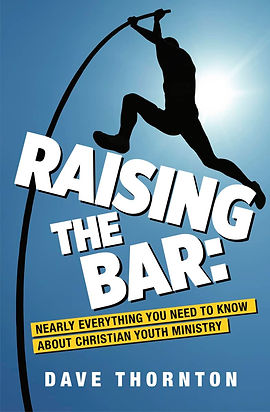
If you want to think more about this, read the chapters 'A healthy team' and 'The law, health and safety' in my book, 'Raising the Bar: Nearly Everything You Need to Know about Christian Youth Ministry' which you can buy here. In fact, just read the whole book. Keeping young people safe can be challenging, but the young people you serve need your very best work in this area. The book's nearly 400 pages. In it, you'll find other ideas about leading your team well. You can find out here what other youth leaders think about the book.


Comments